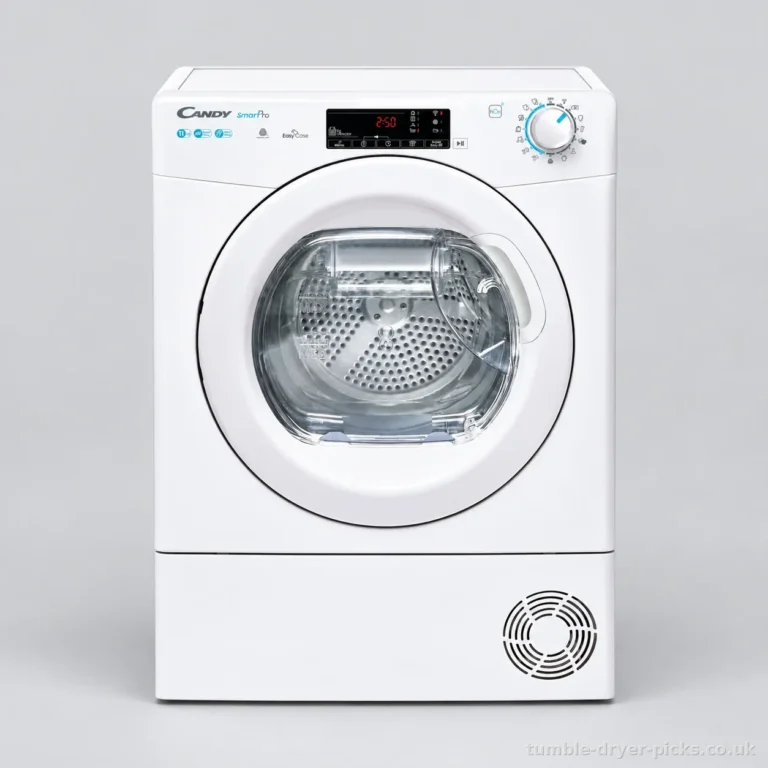
When choosing a tumble dryer with a focus on safety, choose an appliance with clearly documented installation requirements, laundry guidelines and maintenance instructions that fit your daily routine. A well-known brand, a particular technology or high-end positioning is not enough to demonstrate superior safety.
Contents
- How to identify a tumble dryer that meets your safety expectations
- How to interpret features presented as reassuring
- Which technology to choose for your home
- Why the energy label does not answer the safety question
- What to check before installing your tumble dryer
- Stacking compatibility must be confirmed for the appliances concerned
- Water management needs a separate check
- What maintenance is needed after each drying cycle
- Which fabrics can go in a tumble dryer
- The stated capacity does not apply to every fabric
- Anti-crease remains a convenience feature
- How to compare appliances without being swayed by promises
- How much weight to give buyer reviews
- Frequently asked questions about tumble dryer safety
- Which brand should you choose to prioritise safety?
- Is a heat pump tumble dryer safer?
- Can you leave a tumble dryer running while you are away?
- Should you clean the filter after every cycle?
- Can you stack a tumble dryer on a washing machine?
- Is a direct connection to the drain always possible?
- Can you dry laundry stained with oil or solvents?
In France, start with your home and your laundry habits. The right choice depends in particular on the intended location, any stacking plans and the fabrics you need to dry. Here is how to compare these points while distinguishing between marketing promises, convenience and verifiable information.
How to identify a tumble dryer that meets your safety expectations
Looking for excellent safety means carrying out specific checks. Before comparing features, find the instruction manual for each exact model. Documentation covering an entire range needs careful reading to identify which instructions apply to the appliance you are considering.
The priority is to check that you can follow the manufacturer’s instructions. A feature presented as reassuring does not replace this step. If its description is vague, ask exactly what it does and under what conditions it activates, without assuming it provides additional protection.
- Consult the model’s installation instructions.
- Check the instructions for fabrics and programmes.
- Identify the required maintenance tasks.
- Confirm whether stacking or connection is possible.
- Ask for clarification on any safety claims that are not adequately explained.
This checklist provides a consistent basis for comparing appliances. If essential information is missing, leave that point unresolved. A lack of detail should not count in an appliance’s favour when making your selection.
How to interpret features presented as reassuring
Control locks, monitoring or automatic shut-off may feature in marketing claims. Do not assume that a particular model includes them or what they do. Look for their description in the manufacturer’s documentation and check that it addresses your specific needs.
A feature’s name does not tell you enough about how it works. For any questions involving children, a particular installation or an unusual situation, follow the appliance manufacturer’s instructions.
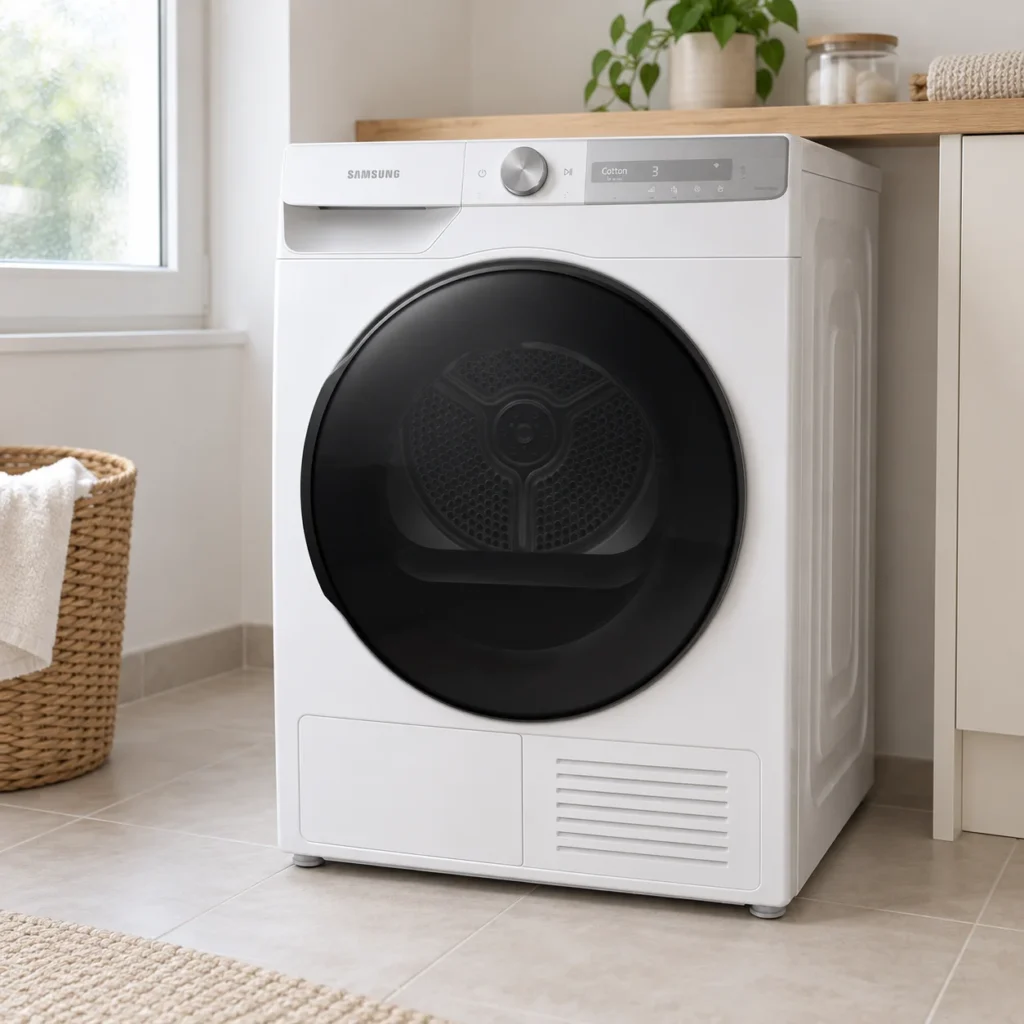
Which technology suits your home
Heat pump, condenser and vented dryers should be distinguished from the start of the comparison. Check the type of each model individually. It cannot be inferred from its appearance, its range or a description of a similar model.
A vented tumble dryer requires a duct leading outside. Check that your planned installation meets the manufacturer’s instructions before choosing this category. For questions about positioning and installation, consult the manual for the appliance you are considering.
Heat pump drying takes longer but uses less energy. This trade-off helps you choose according to your priorities, without demonstrating greater safety. Do not infer a programme duration or energy consumption per cycle for a specific appliance from this.
Why the energy label does not answer the safety question
The energy label covers a different aspect of the comparison. On its own, it cannot rank appliances by safety. Examine energy information and the manufacturer’s instructions separately.
The old A+++ to D scale and the new A to G scale cannot be compared directly. A+++ does not mean A on the new label. When consulting several product pages, identify which scale is used before interpreting the letters shown.
What to check before installing the tumble dryer
A photograph or the dimensions of a space are not enough to confirm that an installation is suitable. Consult all installation instructions for the chosen model. For questions about the room, connections or positioning, follow the manufacturer’s instructions without applying those for another appliance.
Follow these steps in order to prepare your selection:
- Describe your intended installation, including the location and whether a washing machine will be present.
- Find the manual for each model you are considering.
- Compare your plans with the manufacturer’s instructions.
- Have any remaining uncertainties clarified before buying.
Stacking compatibility must be confirmed for the appliances concerned
Only consider stacking a tumble dryer on a washing machine if this configuration is explicitly approved for the appliances concerned. Sharing a brand or looking similar does not confirm compatibility.
Also check which kit is required and whether it is included. Whether the appliances can be stacked and whether the kit is supplied are separate matters. If your layout depends on this configuration, resolve these questions before choosing a model.
Water management needs a separate check
Direct drainage must be confirmed for the model concerned. Do not assume it is supported based on the appliance type or an accessory shown in a promotional photograph.
For an appliance with a water tank, unless direct drainage is confirmed, plan to empty the tank manually. Consult the manual for the relevant instructions. This practical requirement matters when choosing, but it does not indicate a lower level of safety.
What maintenance is needed after each drying cycle
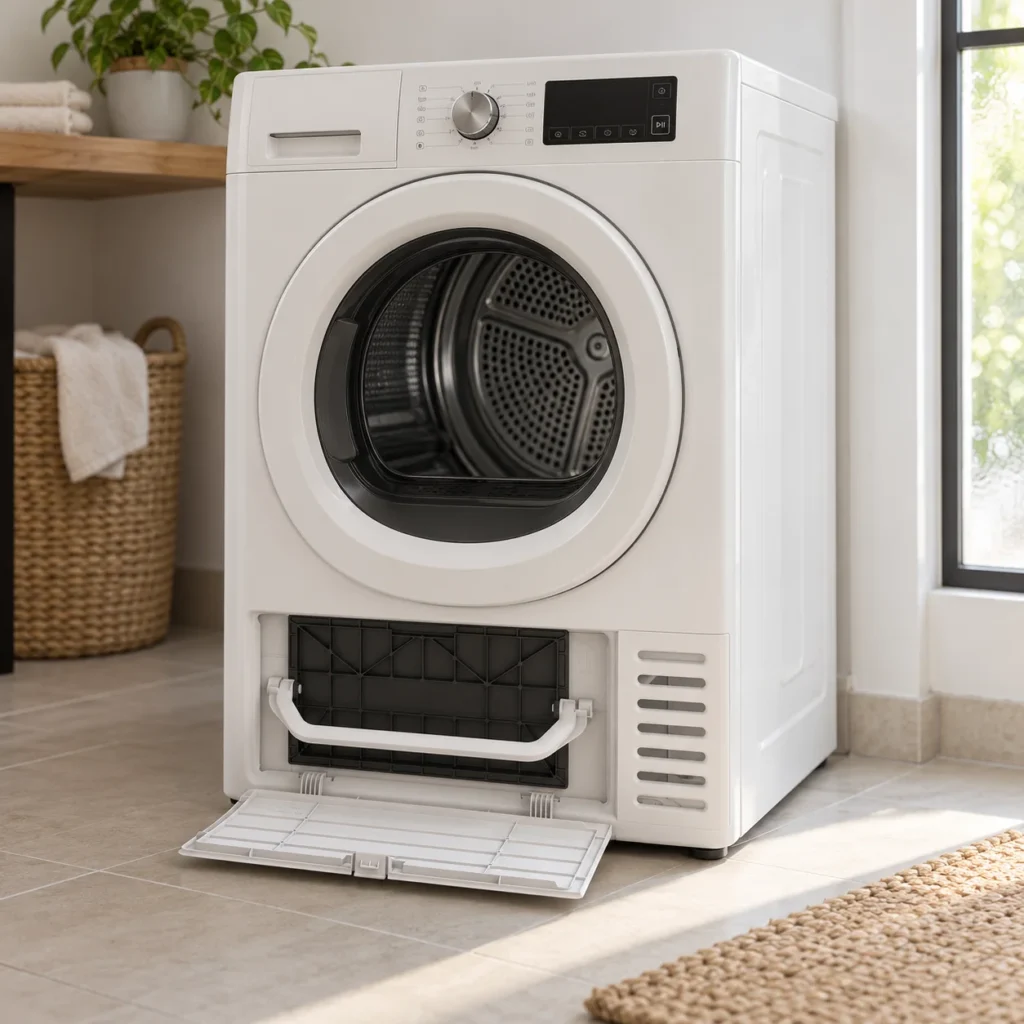
Clean the lint filter after every cycle, as required by the manuals. This is routine maintenance. It is not an appliance fault and should not unfairly count against a model in a comparison.
Before choosing, check the method specified for the model you are considering. The aim is to understand the required routine and decide whether it suits you. For other maintenance tasks, suitable cleaning products and maintenance intervals, follow the appliance-specific instructions.
- Find the instructions for cleaning the lint filter.
- Check how to empty the water tank, where applicable.
- Identify any other tasks required by the manufacturer.
- Keep the documentation for your chosen model accessible.
Buyer reviews can raise useful questions about how clear this routine is. However, they should not replace the manufacturer’s method or lead you to use a tip intended for another appliance.
Which fabrics can go in a tumble dryer
Your choice depends on more than the appliance. It also depends on the laundry you want to dry. Consult the manufacturer’s instructions for the fabrics and programmes you intend to use. If you are unsure about a particular material or treatment, ask for clarification.
The manuals exclude laundry stained with oil, solvents or petrol. Follow this instruction. Do not improvise a procedure to bypass this restriction or treat a particular programme as implicit permission.
The stated capacity does not apply to every fabric
The capacity in kilograms refers to a full load of cotton. Much smaller loads are allowed for synthetics. The headline figure therefore does not represent a universal load size for all your clothes and programmes.
For a useful comparison, start with your usual laundry loads. Then check the guidance for the corresponding programmes. This will help you avoid choosing solely on the advertised capacity without knowing how it applies to your laundry.
The anti-crease function is a convenience feature
An anti-crease function reduces creasing but does not eliminate it. It cannot guarantee laundry that needs no ironing. Check how it works in the model’s documentation if this feature matters to you, and consider it separately from your safety assessment.
How to compare appliances without being swayed by promises
Create a shortlist of models for which you can find documentation. Start by comparing installation requirements, laundry guidelines and maintenance. Then consider their market positioning and the features that suit your preferences.
A high-end appliance does not automatically offer greater safety. Similarly, a longer list of features is no substitute for clear explanations. For every deciding factor, look for confirmation that applies to the exact model.
How much weight should you give customer reviews
Customer feedback can highlight issues worth investigating, particularly how easy the controls or maintenance instructions are to understand. A reassuring review does not prove a level of safety. Nor is an isolated account enough to establish a widespread fault.
When several reviews raise the same question, look for a documented answer from the manufacturer. Without verifiable evidence specific to each model, ranking their safety would imply unjustified certainty.
Frequently asked questions about tumble dryer safety
Which brand should you choose if safety is your priority?
A brand name alone is not enough to distinguish between appliances. Compare specific models using their manuals, installation requirements and maintenance instructions. Choose those whose guidelines suit your home and laundry.
Is a heat pump tumble dryer safer?
The technology alone cannot establish this. A heat pump dries more slowly but uses less energy. To assess whether a model meets your needs, consult its installation and operating instructions.
Can you leave a tumble dryer running while you are out?
Consult your appliance manual and follow the manufacturer’s instructions. Do not assume this is permitted because of an automatic feature, a marketing claim or a customer review.
Should you clean the filter after every cycle?
Yes. Manuals require the lint filter to be cleaned after every cycle. This is part of routine maintenance. Follow the method specified for your appliance.
Can you stack a tumble dryer on a washing machine?
Only if this arrangement is explicitly approved for the appliances concerned. Check compatibility, the stacking kit instructions and whether the kit is included. Do not assume any of these points.
Is a direct drain connection always possible?
No, this option must be confirmed for the specific model you are considering. For an appliance with a water tank, plan to empty it manually unless this option is confirmed, and consult the manual for the relevant instructions.
Can you dry laundry stained with oil or solvents?
No. Manuals prohibit drying laundry stained with oil, solvents or petrol. Follow this restriction and contact the manufacturer if you have any doubts about the laundry concerned.
Was this article helpful?
0% of readers found it useful (0 reviews)